
Anger Is Hopeful
on rage as both hope and fuel

Hello! I’m Heather Lanier, essayist, memoirist, poet, and professor of writing. The Slow Take is my very occasional newsletter, inviting us to lean into what makes us feel more human. Think of it as the opposite of a botox billboard or an AI-written thank-you note. There are only real thank you’s here. Thanks for being here!

Last month, while in the hot and flat and friendly state of Indiana where cars actually yield for pedestrians, I attended a writing conference and heard a brilliant panel of writers talk about “Women’s Rage as a Craft Tool.”
The moderator, Jill Kolongowski, framed the panel by explaining the psychology of our most fiery feeling. Anger is the emotion we experience when we perceive that things aren’t right. Anger is our natural response to injustice, trouble, or violation. Unlike sadness, it motivates us to strive for change.
Many of Kolongowski’s framing ideas came from Soraya Chemely’s book, Rage Becomes Her: The Power of Women’s Anger (a book I ordered as soon as I got home from the conference). Here’s a quote from the book that floored me:
“When a man becomes angry in an argument or debate, people are more likely to abandon their positions and defer to his. But when a woman acts the same way, she’s likely to elect the opposite response.”
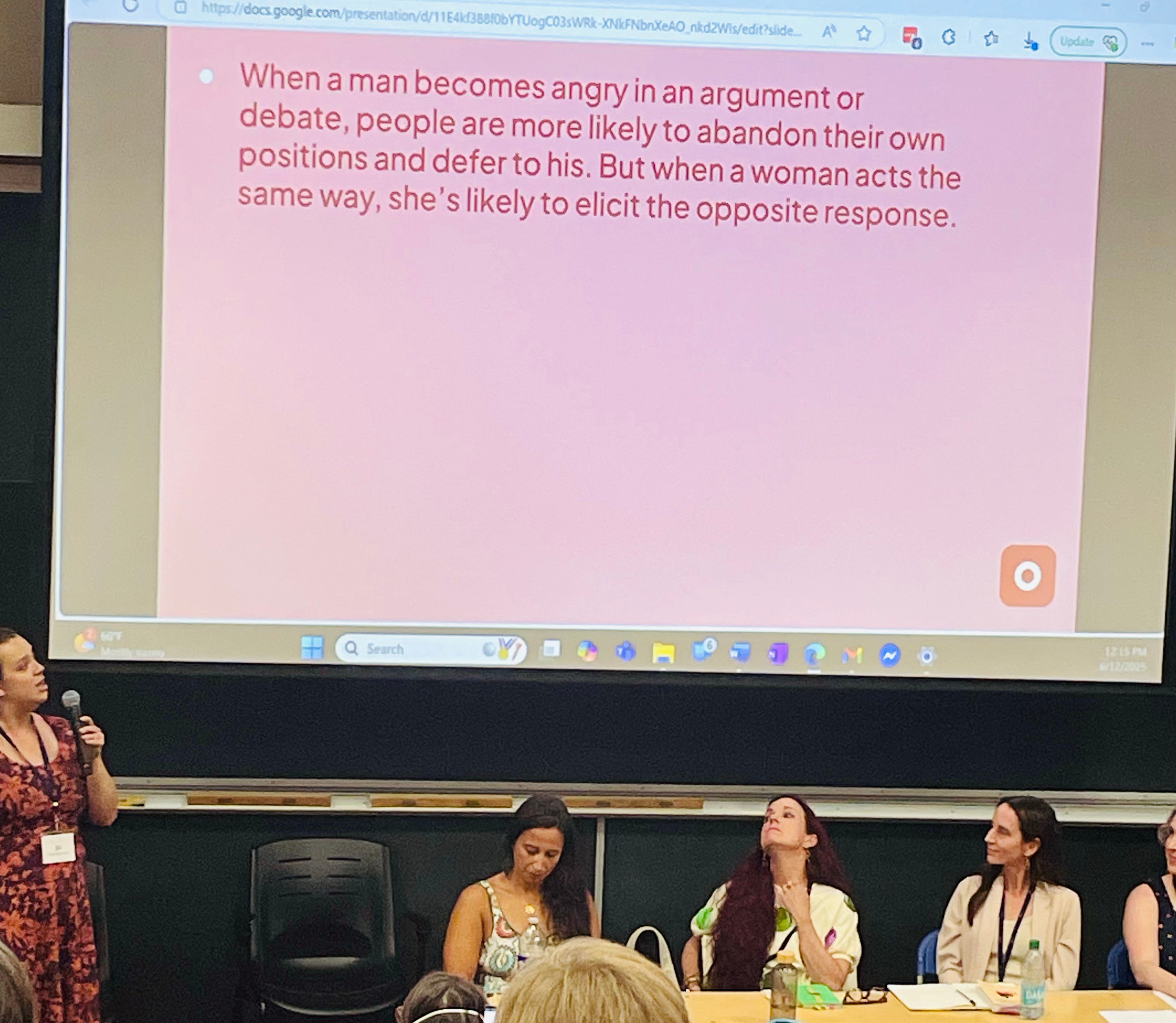
Wow. What a shitty pickle for women. No wonder so many of us deny our anger. You’ve seen this happen, right? Someone tells a woman, “You seem angry,” and she says reflexively, “No I’m not!” Sometimes she even shouts it. “I’m not ANGry!!!” I’ve seen this scenario so many times that I’ve enacted it myself without even thinking.
I used to believe this incessant denial of female rage was because of anger’s violence. Doesn’t anger burn? Set things on fire? Slice lives apart? Who wants to own a feeling that scalds and cuts?
But maybe women also (or mostly) deny their rage because we subconsciously (or consciously) know that anger can make people turn away from us and our ideas. Where rage makes men more convincing, it has the chilling effect of making people think we women are crazy. (Just google images of Brett Kavanaugh at his Supreme Court hearing. Or don’t— because if you’re like me, you can still see the man’s face in your mind.)
But when anger is the natural response to a world not-right—and when so much of the world is not right, for women and children and everyone—then denying our anger might drain us of the fuel we need to enact change.
There’s a quote circulating around the internet, attributed to St. Augustine: “Hope has two daughters: their names are anger and courage.” We’re drawn to this quote right now for a reason. If we have hope for a better world, we’ll need our courage. But we’ll also need our anger.
So I wrote a very short poem for us. (And below that, I wrote a few things I’m angry about. Feel free to join me in the comments.)
Anger Reconsidered

Poor anger—no one wants
to own her. They rename her
frustration, disappointment,
try to spit her down the drain
with their toothpaste.
She’s the fiery link
between what is and what
could be. She deserves
her own spot on the mantle
beside the bookends
of gratitude and grief.
Set her there like a vase.
Place a riot of red
torch lilies inside her—
those spiky flaming blooms.
Not to dress her up—just so
we pay attention
to all she can contain.
                                          -- Heather Lanier

How cool is that torch lily? She’s my current anger inspiration.
Now, as promised, here are a few things I’m mad about:
The 900 billion dollars cut to Medicaid.
The incessant, ignorant right-wing belief that these gigantic cuts will just mean “people who really deserve help will get it.” (Meanwhile, disabled folks and families who care for disabled relatives are living in justifiable fear that they’ll be cut off from their communities, lose their jobs, go bankrupt, and/or be forced into institutions.)
The gutting of the Department of Education.
Bras and swimsuit tops with removable pads. They just come out in the wash, get folded into origami triangles, and make our boobs look weird. Why, Clothing Companies? Why!? (Okay, I’m not really that mad about this, but I needed to end on a note that made me laugh.)
Share your rage below, if you’d like. It turns out, rage doesn’t burn the house down. It just sets a warm fire for us to heat our coffee by.
Tidbits and Things:
If you haven’t read the writers who presented at the panel on “Women’s Rage as a Craft Tool,” I highly recommend them:
My students and I read Beth Ann Fennelly ‘s HEATING AND COOLING: 52 Micro-Memoirs every fall and adore it.
Brooke Champagne’s essay collection, NOLA FACE, is a masterclass in characterization and humor and voice.
Nicole Graev Lipson’s essay collection, MOTHERS AND OTHER FICTIONAL CHARACTERS, became a bestseller for a reason—it’s so good!
You can subscribe to Jill Kolongowski ‘s beautiful series of flash pieces, Tiny True Stories, right here on Substack.
Amy Monticello has so many great essays online, including “How to Tell the Story of an Ordinary Death” and “Waiting for Milk in the Polar Vortex, I Channel William Blake.”
Ahh Heather I'm honored! I love this. You reminded me of something I didn't say at the conference (I think, ha), which was that I prided myself most of my life on not being angry. Anger felt like a useless, wasted emotion. And now I feel like, what a waste, to not feel and use our anger. Yes, anger as hope.
I hate those removable pads too! And I hate that my daughter who was born with a very rare genetic difference (trisomy 1) and her many friends who have Down Syndrome may lose access to their day programs because of Medicaid cuts. They may have intellectual disabilities, but they know not to lie, how to take turns and not interrupt someone who is speaking, and how to apologize when they make a mistake. Maybe they can teach these skills to some people in D.C.